As Founding Product Designer, I helped create IOX, no-code platform for building XR experiences. Over 6 months, I established its product vision, brand, interaction language & scalable design system.
CHALLENGE
How can we make spatial creation as accessible and scalable as web design? The goal was to design a SaaS platform where agencies and immersive startups could build and deploy XR experiences visually—as easily as using Framer or Webflow. But spatial design introduces a new dimension of complexity: physics, depth, haptics, and multimodal input. The challenge was to build a component library and interaction model that made 3D creation intuitive, structured, and intelligent.
STRATEGY
Think like SaaS, design for space, apply proven web design SaaS UX models to an XR environment. Position IOX as the Framer of XR, a tool that unifies design and deployment for immersive experiences. Build from systems, not screens, create an atomic library that behaves as both UI and 3D logic. Focus on clarity, modularity, and adaptability—a design system intelligent enough to morph across devices, contexts, and users.
SOLUTION
Established product strategy and user experience blueprint for cross-device spatial creation. Designed the core interaction model—a spatial interface language for hand, gaze, and device-based design. Built a unified design library (UI, interactions, behaviors, physics) that powers every IOX experience. Collaborated on brand system and creative identity, blending technical precision with creative flow.
RESULTS
Stealth MVP launched to a limited group of users, full design-to-deploy pipeline Design system scaled from 12 to 100+ XR componentsEarly traction with XR studios and creative agencies Framework extended for multi-device deployment (XR, desktop, mobile)

The IOX Design Library


Spatial interaction reimagined for designers. Rather than coding gestures or events, users compose interactions visually: Drag “Follow,” “Look At,” or “Trigger” behaviors onto any object. Define physics, sound, or haptic feedback through modular cards. Preview results instantly in XR, AR, or web environments. Every motion, click, and gaze interaction was designed to reinforce spatial literacy—making 3D design feel natural. Each element is a spatially aware building block, visualized through a dark, fluid UI aesthetic inspired by magnetic fields. The goal: a design system that feels alive, morphing, responsive, and intuitively 3D.


Desktop and VR app builder
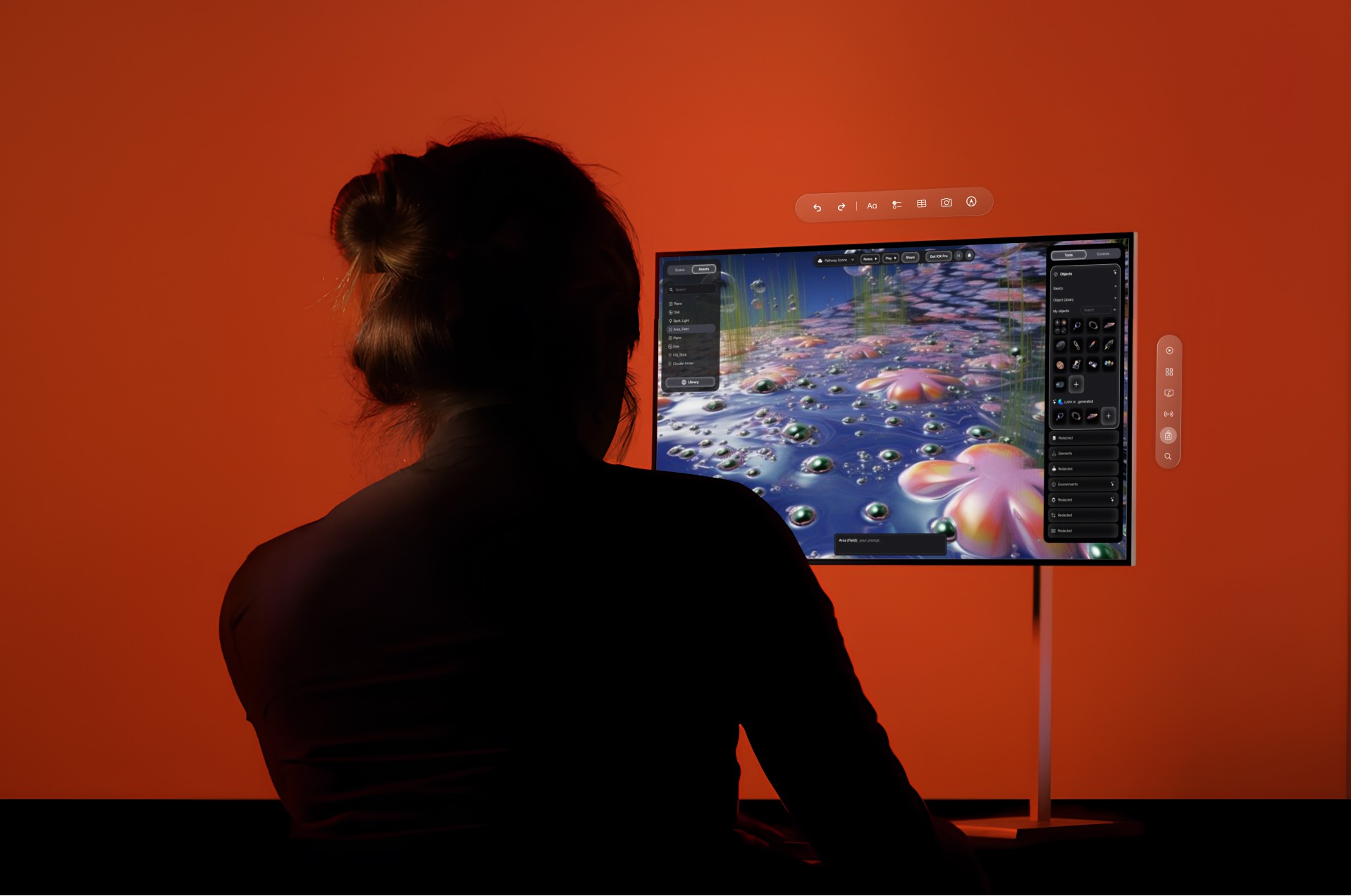
I designed the XR builder to provide a seamless creation experience across both desktop and VR. The desktop version features an intuitive drag-and-drop interface with AI-assisted customization, allowing users to build immersive experiences effortlessly. The VR version reimagines interaction with spatial controls, enabling users to manipulate components naturally using hand tracking and controllers. Both versions share a unified, adaptive UI, ensuring a smooth transition between 2D and 3D workflows while optimizing performance for real-time rendering.
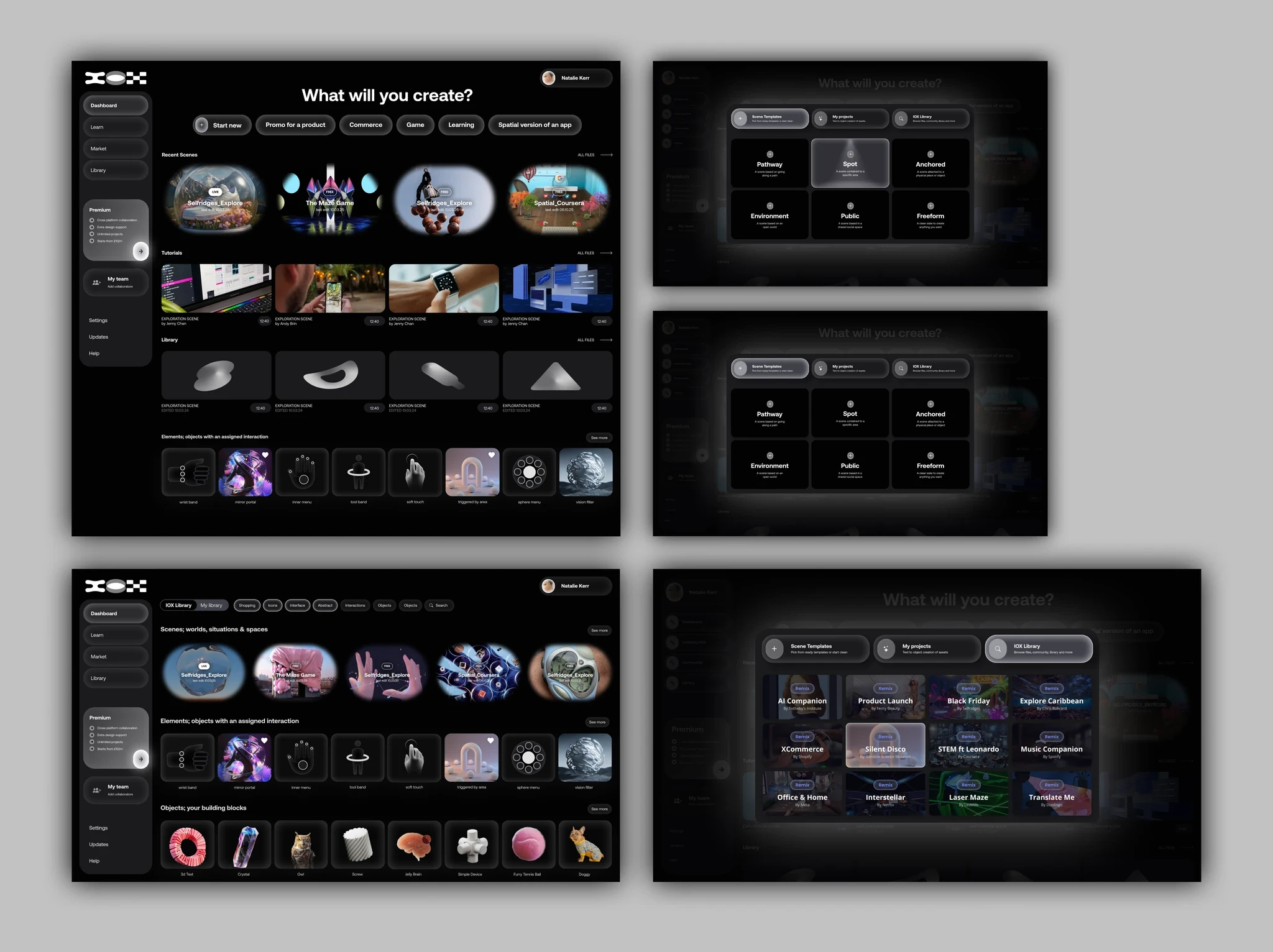


The IOX brand was created as an experience, not just a logo.
It needed to feel alive and intelligent, shifting and adapting like the immersive worlds built inside the platform.
The design language balances clarity and depth through a dark, refractive palette and precise geometric forms. Light and motion act as materials, showing how the system breathes and responds. Typography bridges craft and computation, giving the brand a human yet technical voice.
Every element, from the UI grid to microinteractions, follows the same rhythm. The result is a brand and product that move as one — intelligent, adaptive, and quietly confident.


Research & Prototyping The product vision was grounded in: - Research into XR creation tools (Unity, Unreal, Spline, Framer, TouchDesigner). - Dozens of user interviews with creative directors, immersive designers, and agency tech leads. - Benchmarking workflows from WebGL, motion design, and game engines to identify friction points. The outcome: a new interaction grammar—a bridge between 2D familiarity and spatial creativity.

Applications

