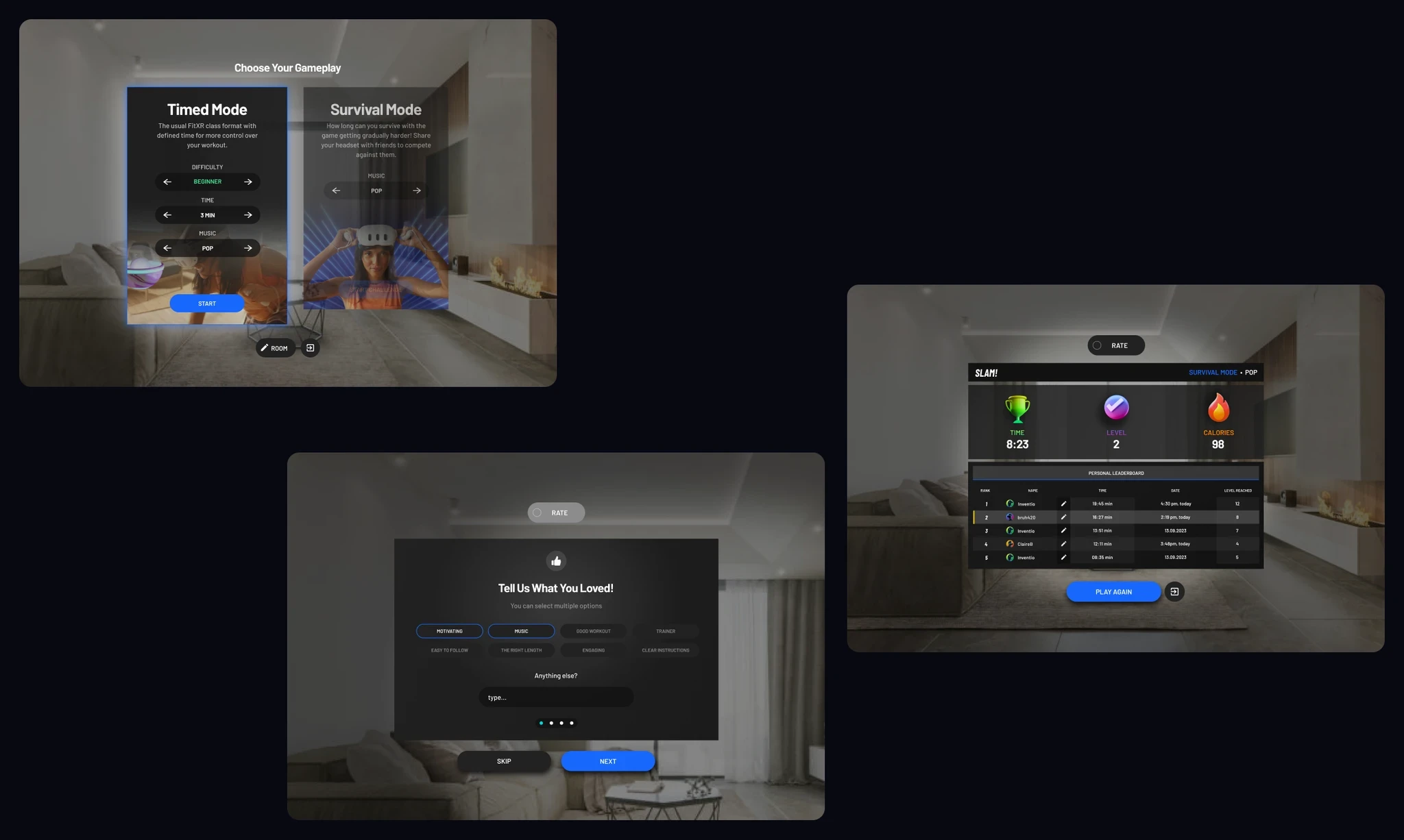
As Design Director and Product Designer, I led a team of creatives & engineers to build Slam for FitXR & Meta, an award-winning MR game that adapts its gameplay to each player's real-world surroundings.

CHALLENGE
Redefine spatial interaction by creating a mixed-reality game that adapts dynamically to any physical space — transforming rooms into interactive playgrounds with intuitive interfaces.
STRATEGY
Design a generative space engine and interaction system that understands real-world geometry and maps it into gameplay. Focus on hand-based controls, minimal UI, and spatial cues to keep users immersed and oriented in their environment.
SOLUTION
Built a custom spatial tracking pipeline using room-mapping algorithms to place virtual objects within the physical environment. Designed lightweight HUD navigation to guide movement without breaking immersion. Implemented progressive onboarding and level design principles to balance exploration, problem-solving, and action seamlessly.
RESULTS
Delivered one of FitXR’s most-played XR titles — an experience that raised the bar for mixed-reality design. Enabled fully interactive gameplay tightly integrated with physical spaces Simplified XR controls and enhanced spatial understanding Demonstrated scalable mixed-reality interactions as a new genre in the platform

Within 1 month of launch, Slam became FitXR's #1 most-played studio, the platform's 1st fully spatial, room-scale experience, and achieved the #2 highest completion rate across all FitXR experiences.



Generative space algorithm In a spatial, room-based mixed reality experience, we use camera feedback and mapping technologies to understand and interact with the user's physical environment. We collected over 4k rooms to develop an object placement algorithm named Magic Engine. This allows virtual elements to be interacted with hands, seamlessly integrated into the real world, creating a true and interactive mixed reality experience.


Game Mechanics
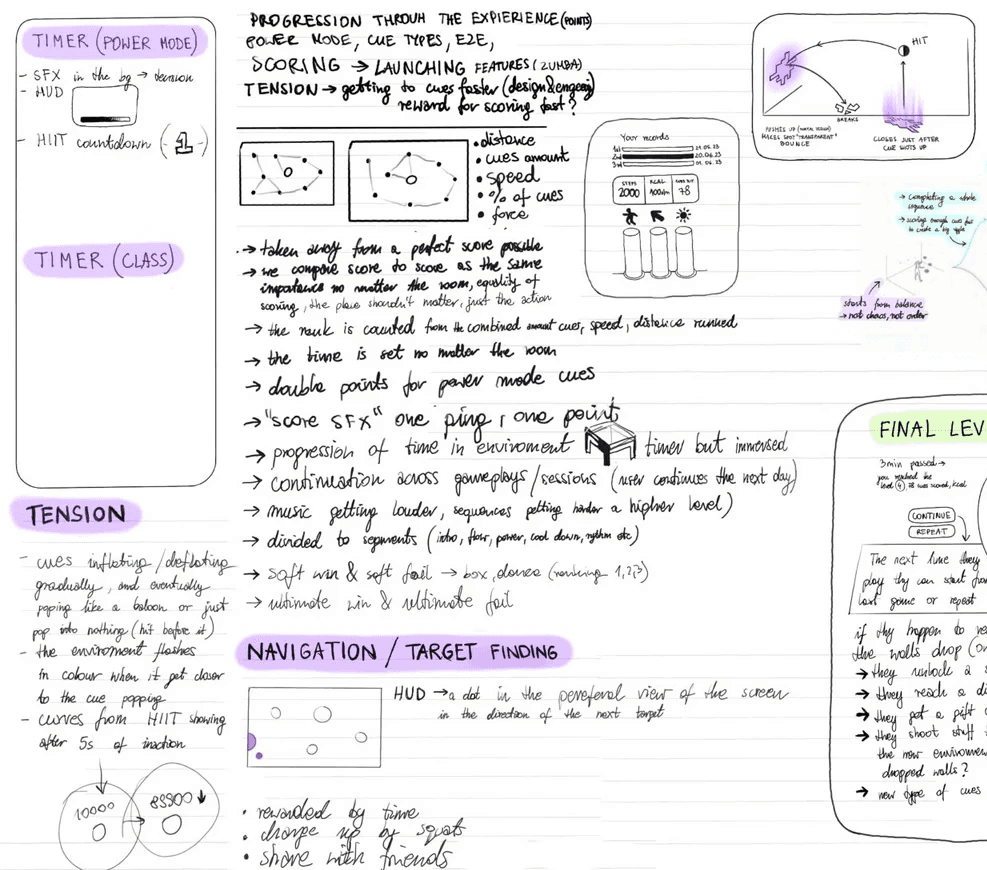
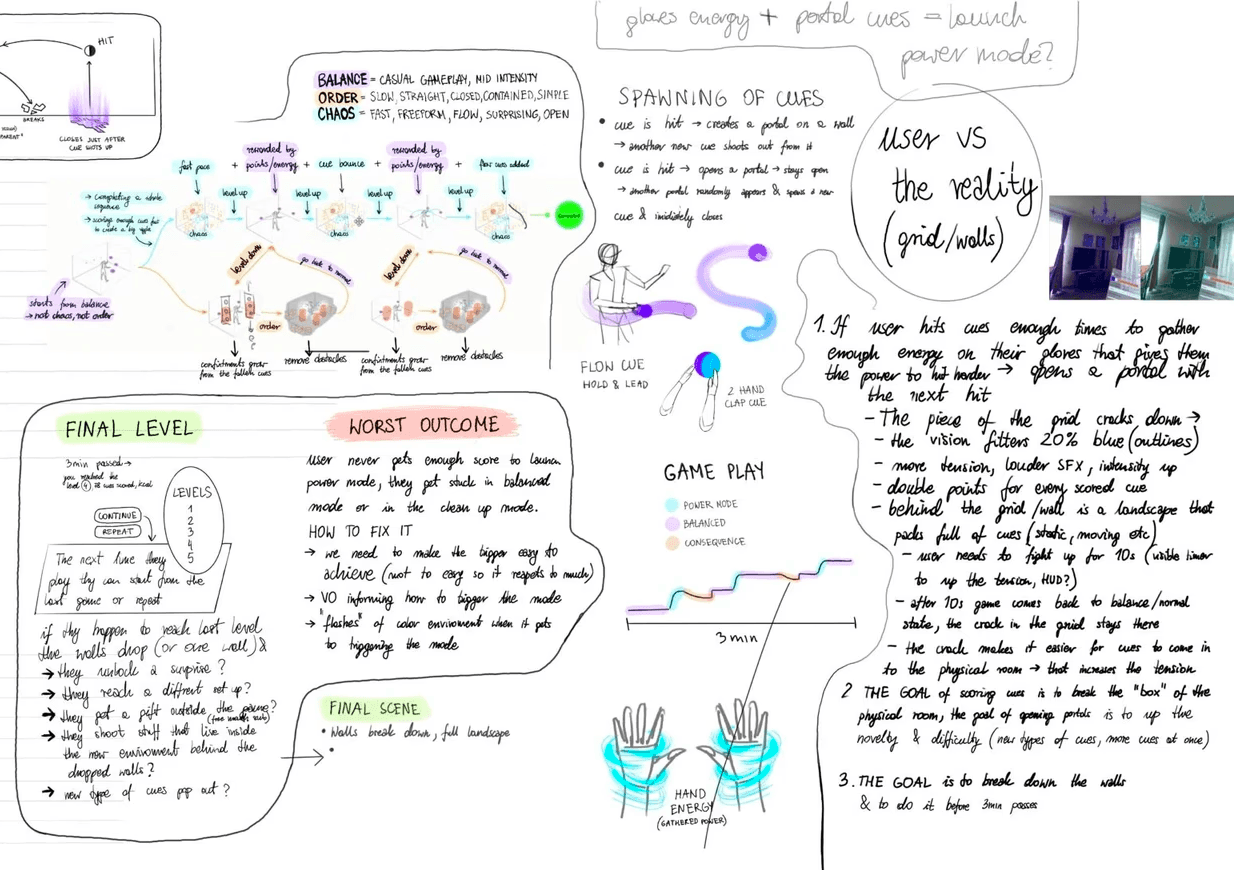
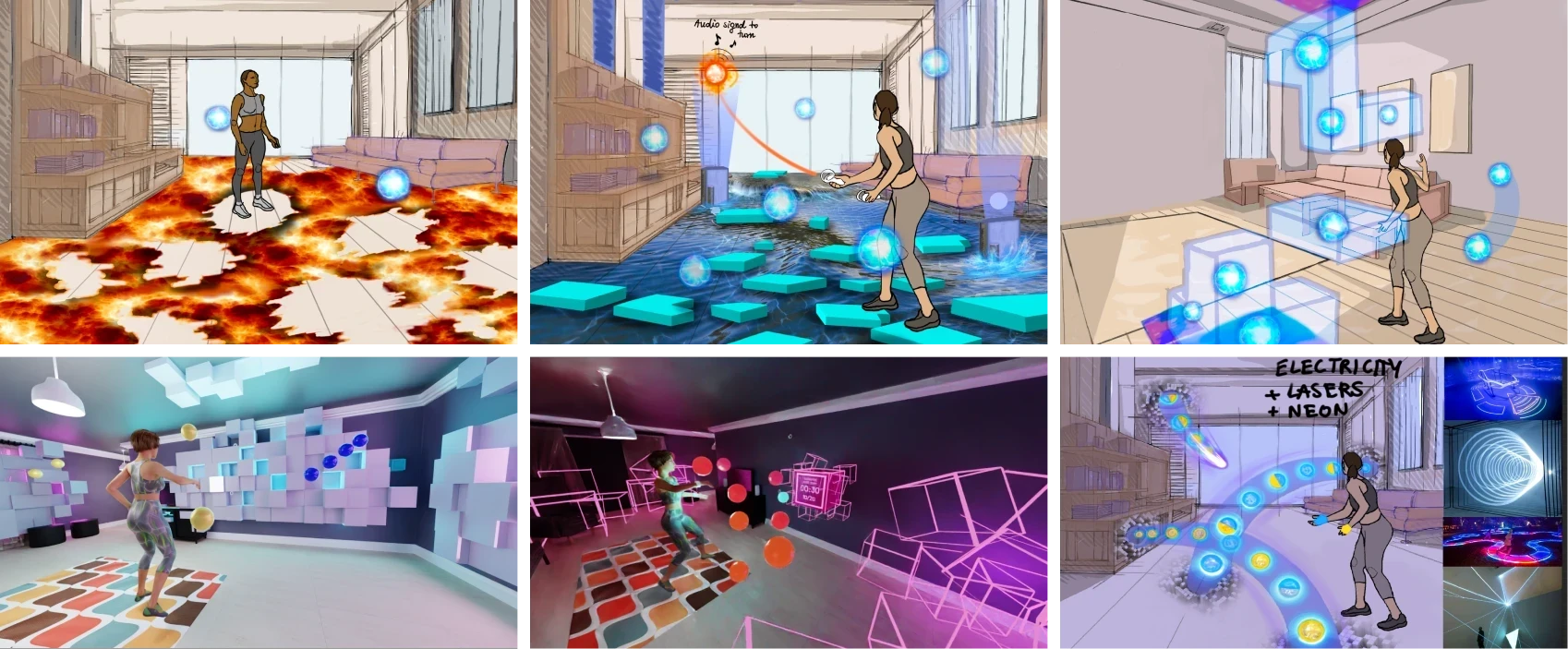
When designing game mechanics it's crucial to create diverse levels that challenge players, implement points scoring systems to reward achievements, and design intuitive navigation mechanics that leverage the real-world environment. Tension-building elements, such as time limits or escalating difficulty, heighten engagement, while dynamic target behaviors keep gameplay unpredictable and exciting. Structuring gameplay to balance exploration, problem-solving, and action ensures a satisfying and immersive experience in the mixed reality space.


Targets
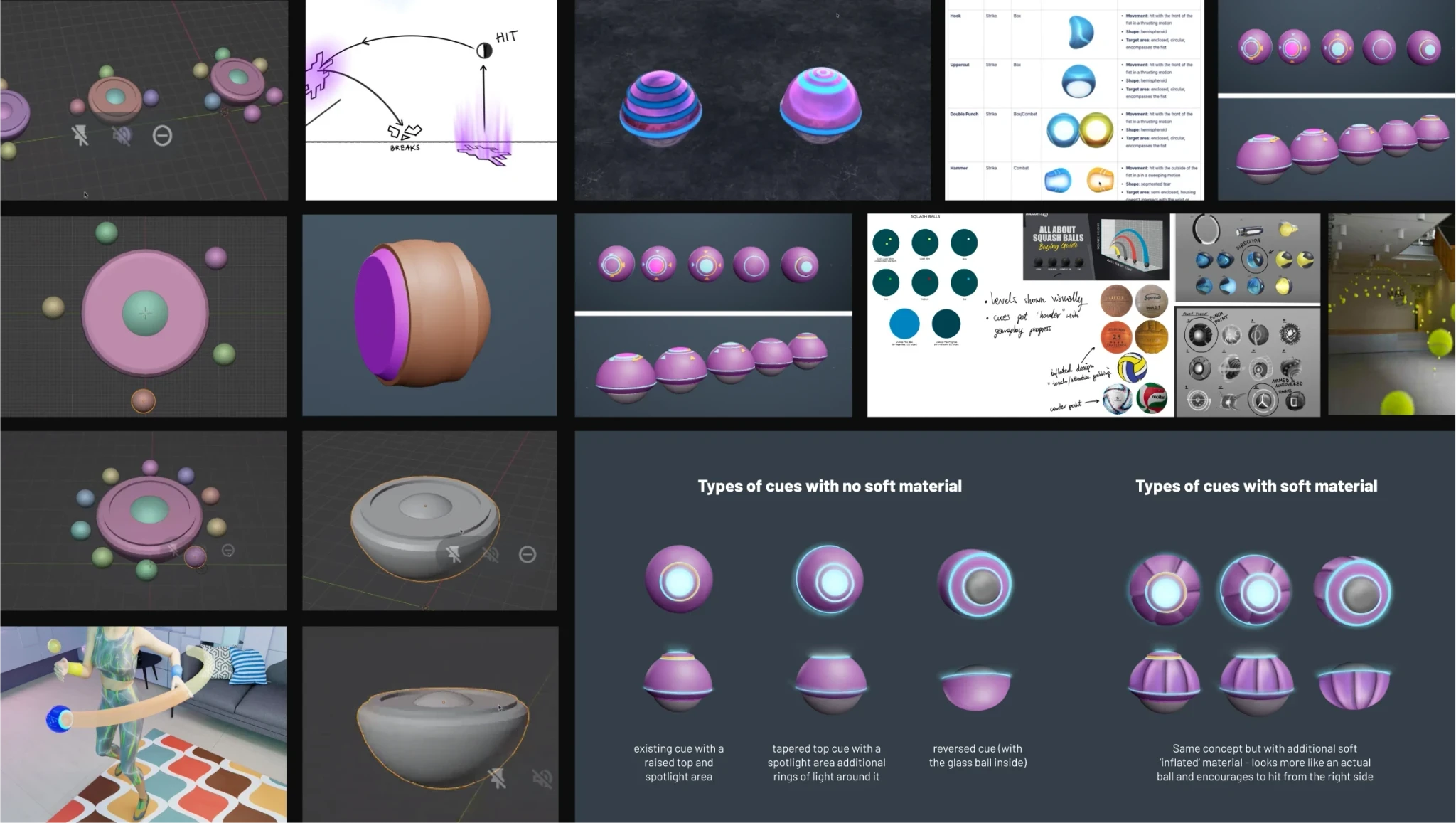

In active games, especially immersive it's important to limit the amount of information to pay attention to. the fast pace of the experience requires a design that packs the most cues into limited amount of elements, not to disturb the flow of the game. Each target contains all needed instructions needed to complete the task fast.

Navigating in custom space
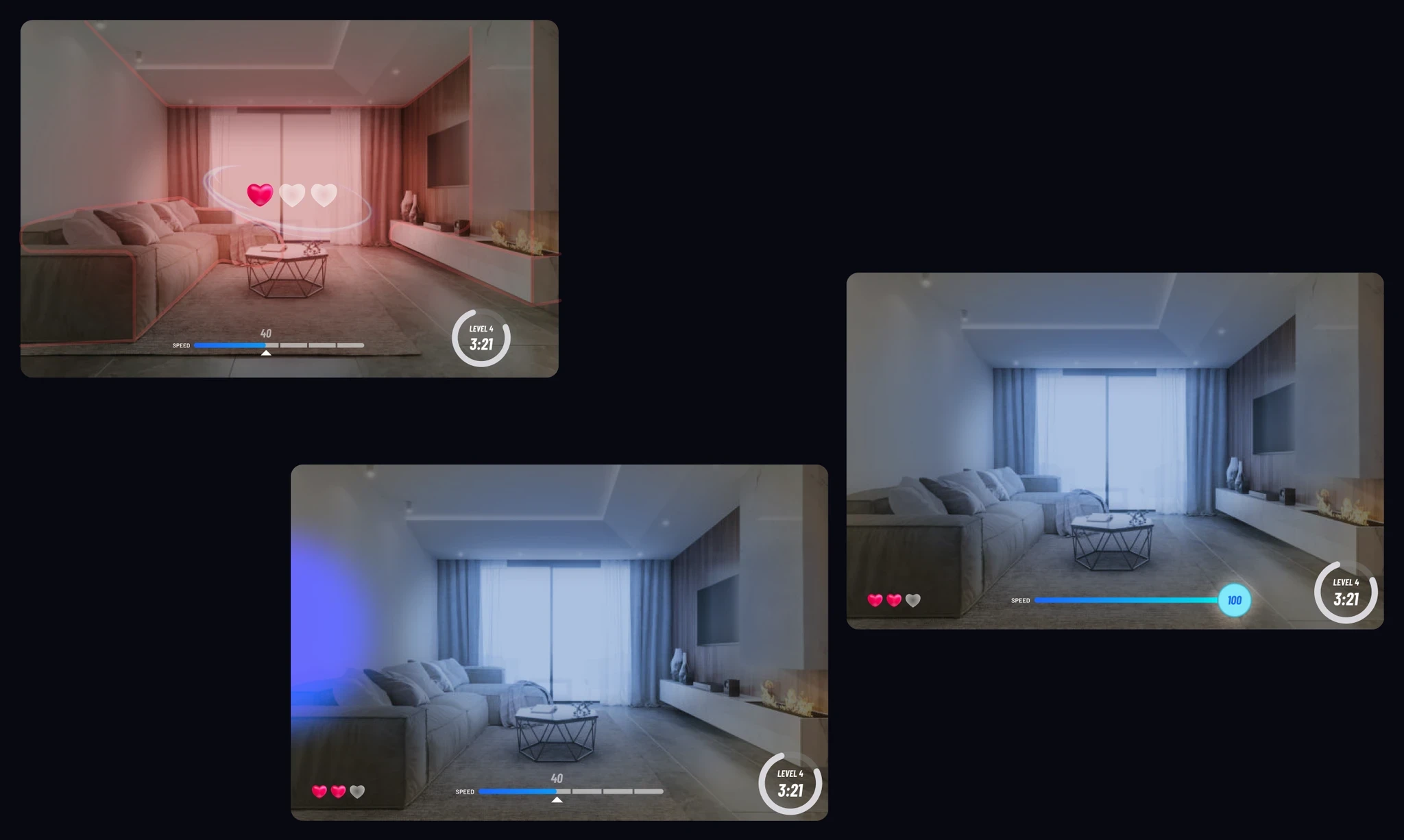
With using HUD design to navigate the user around the space, we never leave them alone; a lot of test users felt unsure how to get to the next target.
VR onboarding flow

To enter the mixed reality realm the users need to go through a quick onboarding first - fully in VR. it's important to keep the intro easy and informative, the better we prepare the user for the experience the less confused they will be.